
Last Updated: October 31, 2026
Quick Summary
Minimize business downtime during painting by phasing the job into zones, so each area is painted after close or before open and back in service before your next rush. Paint low-revenue zones first, book evenings and weekends for customer-facing areas, and hold one buffer week for weather or drying delays.
- Plan small commercial repaints around Thanksgiving, holiday trading, and your slowest days.
- Send staff the painting notice at least a week ahead and post it at the counter and door.
- Cover heavy fixtures with plastic sheeting, label every covered item, and tape one access route.
- Set re-entry timing from the manufacturer’s technical data sheet, then add margin for ventilation.
- Keep one buffer day per phase and have an alternate zone ready if exterior work stalls.
Table of Contents
- Plan Phased Commercial Painting Around Your Trading Calendar
- Send a Business Painting Notice Template Before Crews Arrive
- Protecting Furniture During Commercial Painting and Clearing Access Routes
- Control Dust, Odor, and Re-Entry With Product-Specific Instructions
- Build a Contingency Plan for Weather and Drying Delays
- Frequently Asked Questions
Plan Phased Commercial Painting Around Your Trading Calendar
Minimizing business downtime starts with deciding which weeks you can afford a wall out of action. We plan small commercial repaints around Thanksgiving, holiday trading, and your slowest days.
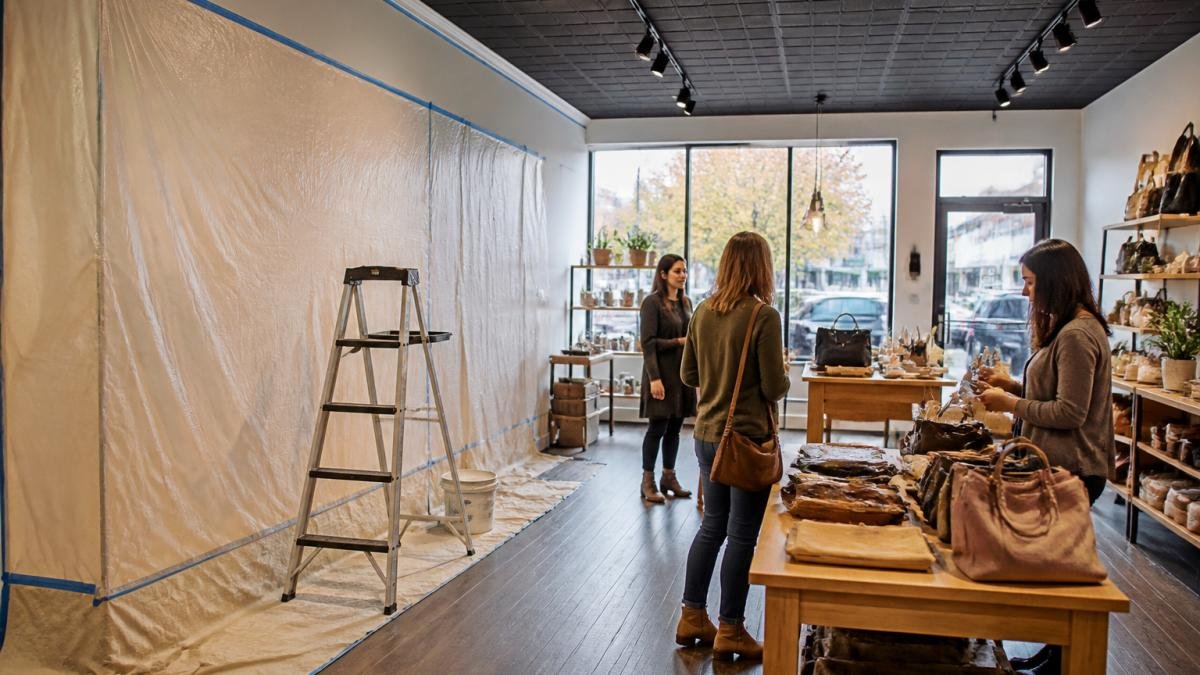
Phased commercial painting splits the job into zones so the rest of your space stays open, with each zone painted after close or before open and back in service before your next rush.
Pick freeze dates for peak trading weeks, rank zones by revenue, paint low-revenue zones first, book evening and weekend slots for customer-facing areas, and hold one buffer week for weather or drying delays.
| Phase | Timing | What Stays Open |
|---|---|---|
| Back office or stockroom | Overnight, midweek | Sales floor |
| Secondary wall or fitting rooms | After close, two nights | Everything by opening |
| Main sales floor | Sunday or a closed day | Nothing, planned closure |
Send a Business Painting Notice Template Before Crews Arrive
Notices go out before the first ladder unfolds, so staff can move personal items and customers know which entrance works. Post the same notice at the counter and on your door, and send it to staff at least a week ahead.
Once dates are set, you can request a free estimate from Coast Painting.
Protecting Furniture During Commercial Painting and Clearing Access Routes
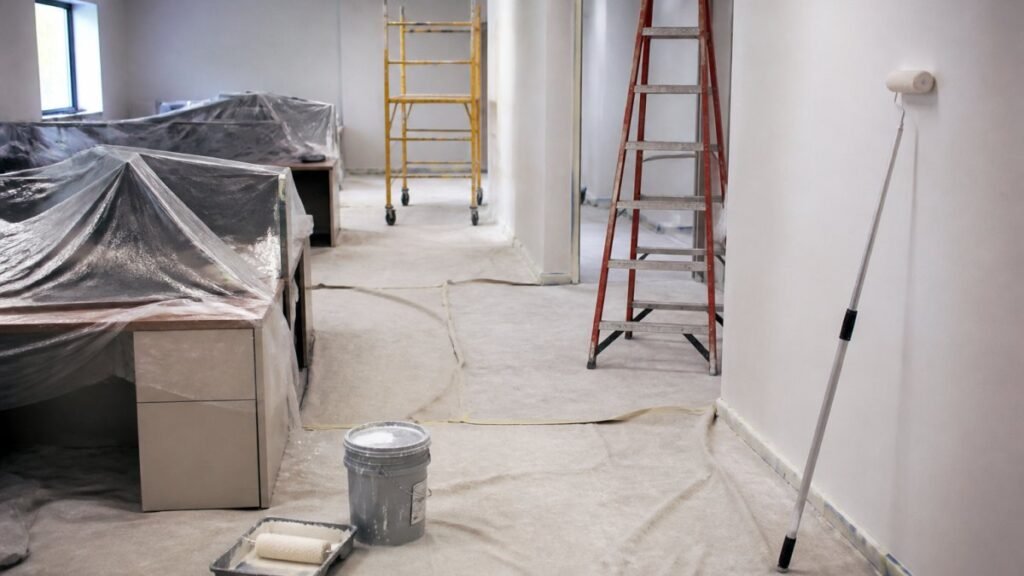
Cover first, paint second. Move small items and paperwork out of the work zone, push heavy fixtures to the center and cover with plastic sheeting, tape sheeting along baseboards and counter edges, label every covered item, and mark one access route with floor tape. For finishes that hold up during and after the repaint, see these protective coatings for facilities.
Control Dust, Odor, and Re-Entry With Product-Specific Instructions
Ventilation and return-to-use timing depend on the product, not a general rule. Ask for the manufacturer’s technical data sheet, follow its dry and cure times, then add margin before reopening a tight space.
Run fans and open windows where the building allows, keep staff and customers out of freshly painted rooms until the coating sets, and follow the product label for re-entry. We do not promise odor-free coatings or zero downtime.
Build a Contingency Plan for Weather and Drying Delays
Every schedule needs slack. Coastal fog, rain, and cool mornings can push exterior work, and a slow-curing coating can push re-entry.
Keep one buffer day per phase, have an alternate zone ready if exterior work stalls, and confirm the crew’s communication contact before day one.
Frequently Asked Questions
How can a business stay open while it is being painted?
Work in phases so only one area is closed at a time. Map your floor into zones, then have the crew coat one zone while staff and customers use the rest. Schedule noisy or high-odor steps before opening or after closing. Keep clear access routes marked, and confirm with your contractor which areas are off limits each day. A written sequence agreed before the start date prevents crews and staff from working in the same space.
How long should a business wait before using a freshly painted area?
It depends on the product. Commercial paint drying and curing time varies by coating type, film thickness, humidity, and ventilation, so ask for the manufacturer’s return-to-use guidance in writing rather than relying on a general rule. Many water-based wall coatings allow light use within hours, while floors and trim need longer. Plan re-entry around the label instructions, not the clock, and keep foot traffic off until the contractor confirms the surface is ready.
Can painting be scheduled around Thanksgiving and holiday trading?
Yes, and it often should be. Holiday weeks bring predictable slow periods for many Central Coast businesses, which makes them useful for larger phases. The trade-off is crew availability and longer dry times in cooler, damper weather. Book early, confirm which days the crew actually works, and keep a buffer before your busiest trading days. A phased commercial painting schedule that finishes well ahead of peak season protects revenue.
Thanksgiving and holiday trading leave little room for a messy repaint. Coast Painting plans phased commercial work around your calendar, protects furniture and access routes, and follows product-specific return-to-use instructions so each zone comes back online on schedule. Get started with Coast Painting and request a free estimate for your small commercial repaint.
