

Last Updated: November 8, 2026
Quick Summary
The right exterior paint for a coastal home depends on the surface, existing finish, moisture conditions and exposure—not a universal brand ranking. Choose a compatible coating system for stucco, wood siding, trim or doors, then follow its preparation and application instructions. Salt residue, fog and sun make the condition of the surface and the timing of the work important.
- Stucco needs a compatible exterior masonry system selected for the wall’s condition; paint is not a repair for an active leak.
- Elastomeric coatings have product-specific crack-bridging and vapor-permeance properties; suitability must be assessed rather than assumed.
- Wood siding needs a finish approved for its substrate and existing coating, with an appropriate primer where required.
- Trim and doors need an exterior-rated finish suited to the material and use; compare sheen and cleaning guidance for the actual product.
- Preparation starts with contamination removal, substrate inspection and a drying plan; assess older paint for lead hazards before disturbing it.
Table of Contents
- Choosing Paint for Coastal Homes: Match the Coating to the Surface
- Best Paint for Stucco Exterior in Salt Air
- Best Exterior Paint for Wood Siding Near the Coast
- How to Prepare a House for Exterior Painting
- Exterior Paint Sheen for Trim and Doors
- Comparing Coating Systems by Surface
- Frequently Asked Questions
Choosing Paint for Coastal Homes: Match the Coating to the Surface
Choosing a coating starts with identifying the substrate and the condition of the existing finish. A San Luis Obispo County home may have stucco walls, wood fascia, previously painted doors and metal details that require different systems. Ask for the proposed primer and finish by product line, the areas receiving each, and the preparation included. A familiar brand name alone does not establish suitability.
Best Paint for Stucco Exterior in Salt Air
For stucco, compare exterior masonry coatings that are compatible with the existing surface. Identify moisture sources, loose material and needed repairs before selecting a system. Crack-bridging and water-vapor performance are product-specific; the word elastomeric does not establish that every coating suits every wall. Ask how cracks will be repaired, whether a conditioner or primer is required, and what application thickness the manufacturer specifies. Do not treat a coating as a substitute for fixing a leak. If you have a stucco repaint in mind, request an estimate from our team.
Best Exterior Paint for Wood Siding Near the Coast
Wood siding should be assessed for contamination, loose finish, adhesion and damaged boards before repainting. Bare or repaired areas may need an appropriate primer, and some wood species need additional stain-control considerations. Specify a finish approved for the siding and compatible with the previous coating. Agree separately on any wood replacement; it should not be assumed to be part of the painting price. See our guide to exterior house painting cost in California and our residential painting services.
How to Prepare a House for Exterior Painting
Preparation should address contamination, damaged coating and moisture before new paint is applied. Confirm how salt, dirt and mildew will be cleaned, how the crew will protect windows and landscaping, and how cleaned surfaces will be allowed to dry. Before disturbing paint on a pre-1978 home, arrange an appropriate lead-hazard assessment and lead-safe work practices. Fog, rain and overnight dampness can affect the work window; follow the selected coating’s instructions rather than relying only on a sunny afternoon. For reference, see Sherwin-Williams surface-preparation guidance and EPA guidance for painting older homes.
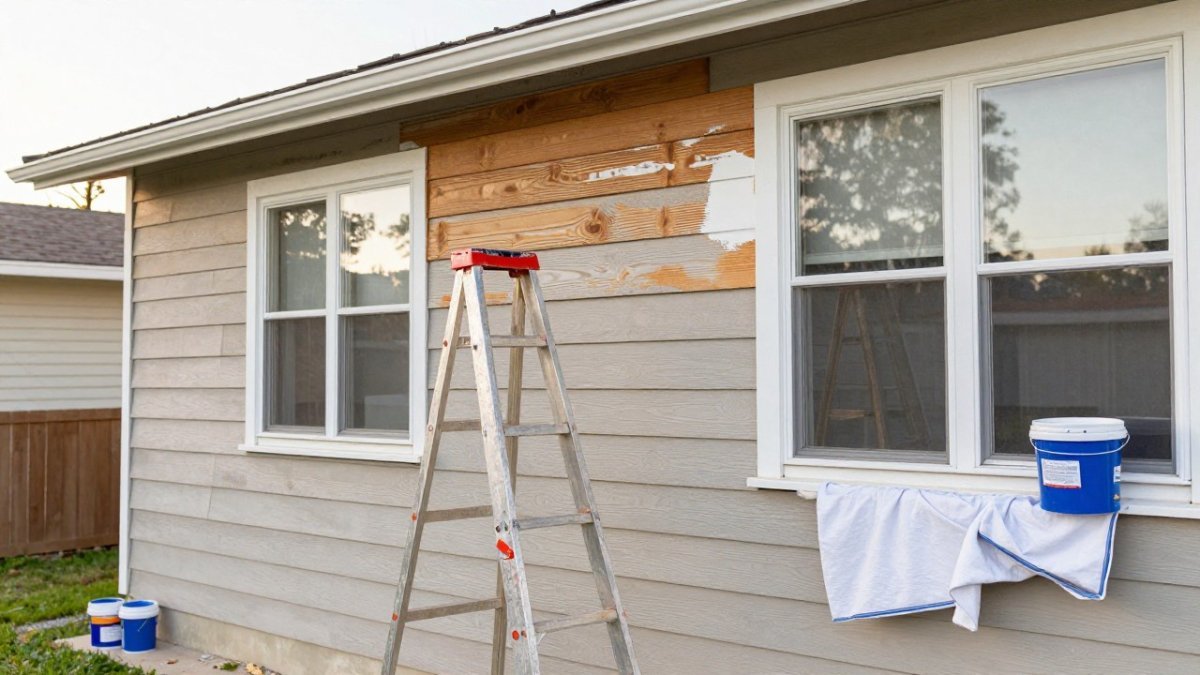
Exterior Paint Sheen for Trim and Doors
Trim and doors need an exterior-rated finish appropriate to the material and existing coating. Satin and semi-gloss are options, not universal requirements. Compare the actual product’s sheen, cleaning instructions and curing requirements, and ask how adhesion will be checked on previously glossy finishes. A door finish should be selected for its intended use rather than assumed interchangeable with wall paint.
Comparing Coating Systems by Surface
|
Surface |
Coating Example |
What to Confirm |
Watch For |
|---|---|---|---|
|
Stucco |
100% acrylic or other specified masonry system |
Look for stated substrate compatibility |
Treat moisture problems before coating |
|
Wood siding |
Approved exterior wood system |
Follow the product’s exposure guidance |
Preparation and existing coating adhesion |
|
Trim and doors |
Suitable exterior trim or door finish |
Compare sheen, cleaning and curing guidance |
Gloss level and substrate suitability |
|
Older or cracked stucco |
Elastomeric system, if specified |
Bridging capability is product-specific |
Not a substitute for structural repairs |
For a deeper comparison, read our guide to choosing long lasting exterior paint and review exterior painting warranty expectations.
Salt exposure is one reason to choose a clear scope and a surface-specific coating system. Coast Painting brings more than 40 years of experience to Central Coast residential projects. Request an estimate to discuss preparation, products, protection and practical scheduling for your home’s exterior.
Frequently Asked Questions
What type of paint is best for coastal areas?
There is no single best paint for every coastal surface. Select an exterior-rated system approved for the substrate, existing finish and exposure. Compare the actual product data for moisture management, mildew resistance, application conditions and maintenance. Mildew resistance does not mean mildew can never return. Have dampness, cracking and adhesion problems assessed before choosing a coating.
How does salt air affect exterior paint?
Salt residue and other contaminants can interfere with adhesion, so suitable cleaning matters before repainting. Coastal exposure is one factor; condition also depends on sun, moisture, preparation and the selected coating. Inspect the actual surface instead of assuming every coastal home needs the same repainting interval.
How should wood siding be prepared before repainting near the coast?
Assess the existing coating and any lead hazards before disturbing older paint. Use an appropriate cleaning and preparation method, allow the wood to dry as required, and prime where the coating system specifies. Identify decayed boards and agree separately on repairs or replacement. Follow product-specific temperature, moisture, recoating and curing instructions rather than a fixed calendar allowance.
